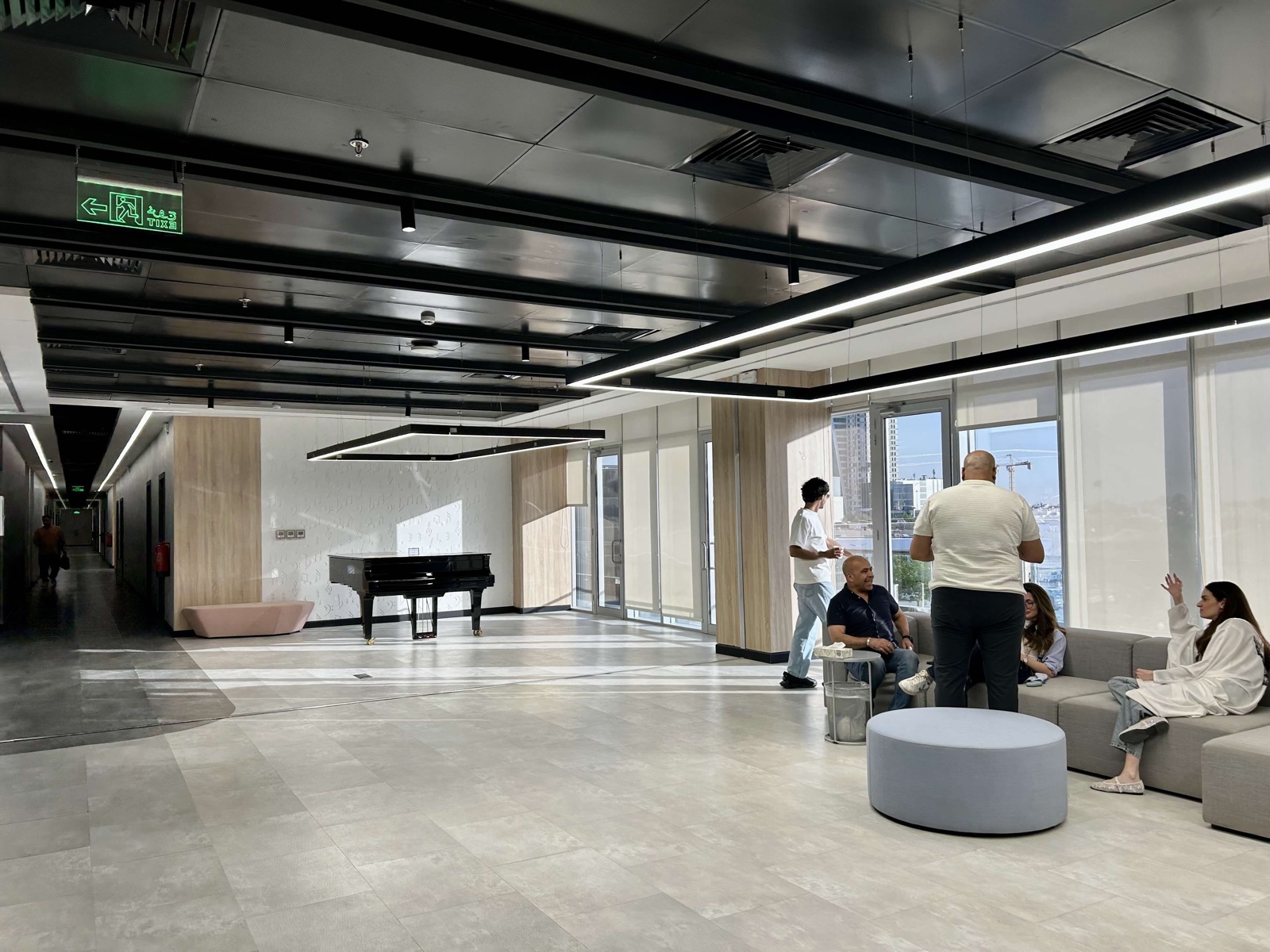
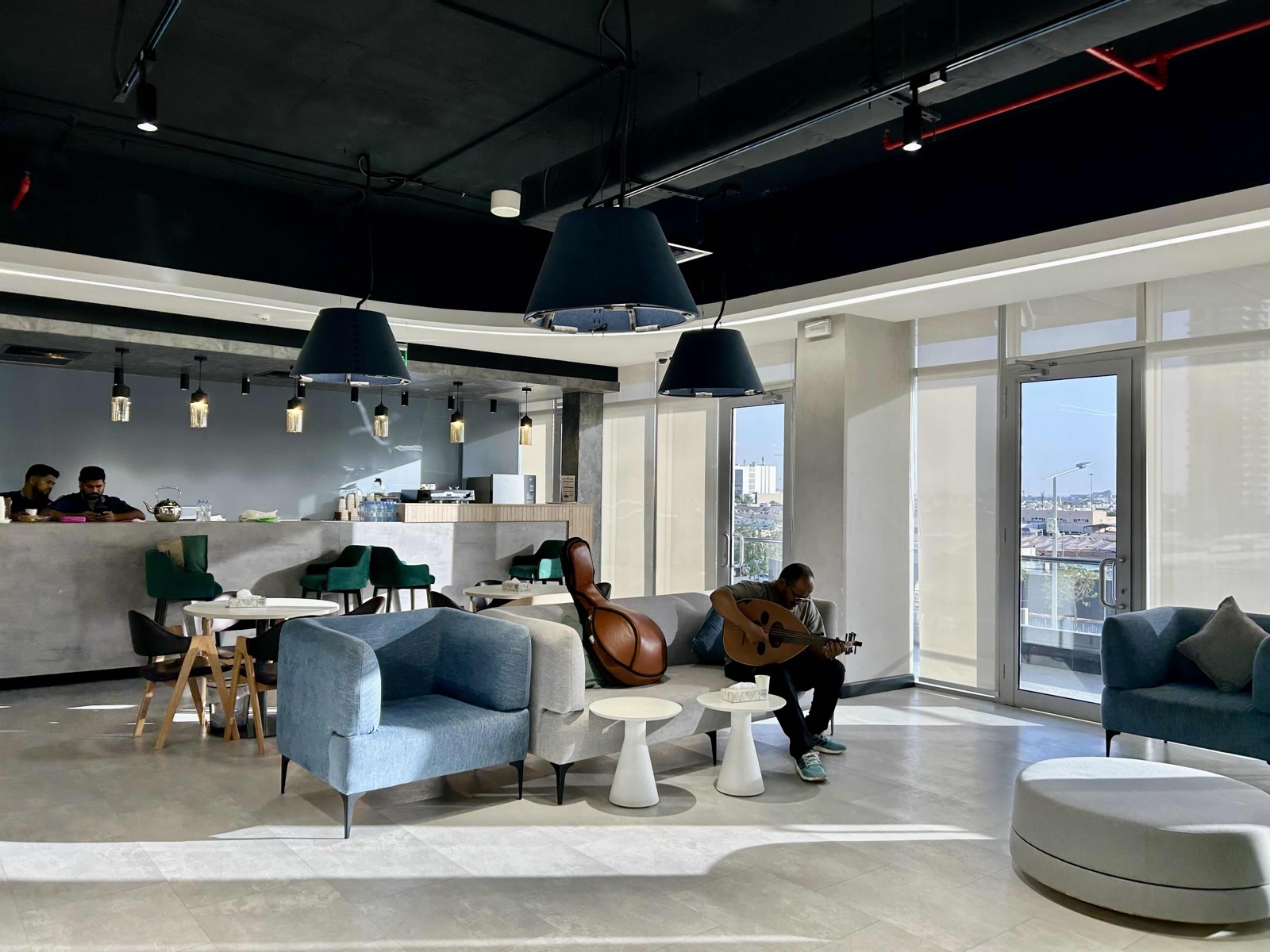
Inside a single building near Olaya Street and the King Fahd District in central Riyadh, three music institutions sit side by side. Step through the entrance and the sounds of lessons and practice sessions mingle from every direction, the place bustling with people: The Oud House Riyadh, the Saudi Music Hub, and the Saudi National Orchestra and Choir. Each with its own distinct role, the three institutions share one space and, together, shape the present of Saudi Arabia's music industry.
Inside the Saudi Music Hub — Source: photo by the correspondent
Inside the Saudi Music Hub — Source: photo by the correspondent
Saudi Arabia has lately been nurturing its cultural industries as one of the core pillars of its national growth strategy, moving actively to build the foundations of a music industry. Once a country where music education and performance were tightly limited, it has, since the launch of Vision 2030, rapidly established concert venues, educational institutions and professional arts organisations, expanding its music ecosystem. At the centre of this shift is the Music Commission under the Ministry of Culture. The Commission pursues a range of programmes aimed at training professional musicians, broadening the base of music education and revitalising the performing arts, while also devoting effort to preserving traditional music and expanding international cultural exchange.
The Oud House Riyadh: Carrying On the Identity of Arab Music
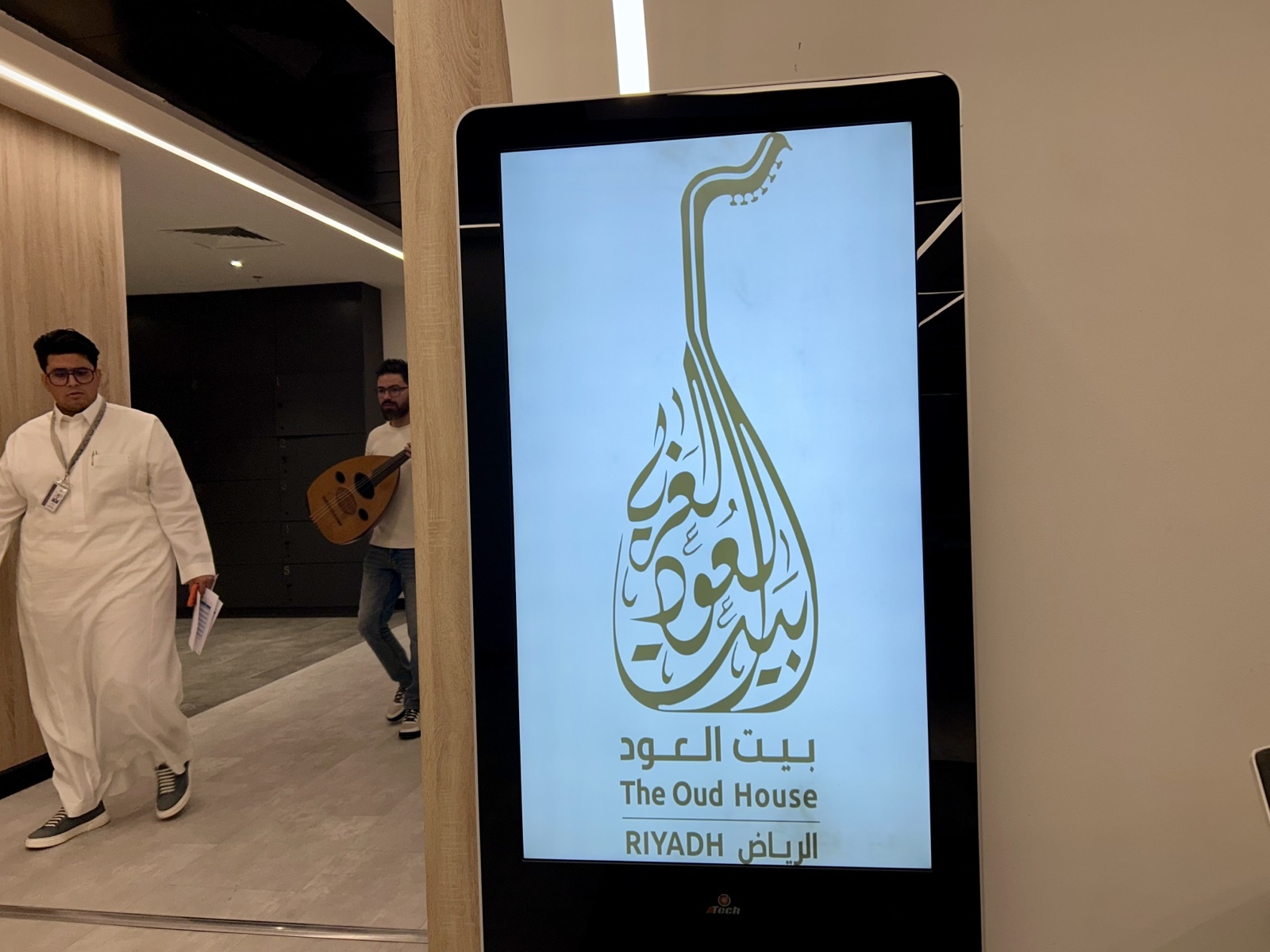
The Oud House Riyadh is an educational institution founded by Naseer Shamma, the world-renowned Iraqi-born oud player and educator, and is run with the aim of preserving traditional Arab music and training professional performers. The oud is a plucked string instrument with a pear-shaped body and a short neck; it is the emblematic instrument of Arab music and is known as the origin of the Western lute. At The Oud House Riyadh, students learn not only the oud but also a variety of traditional instruments such as the qanun, the ney and the violin, through a systematic curriculum that combines practical performance with music theory.
The Oud House Riyadh — Source: photo by the correspondent
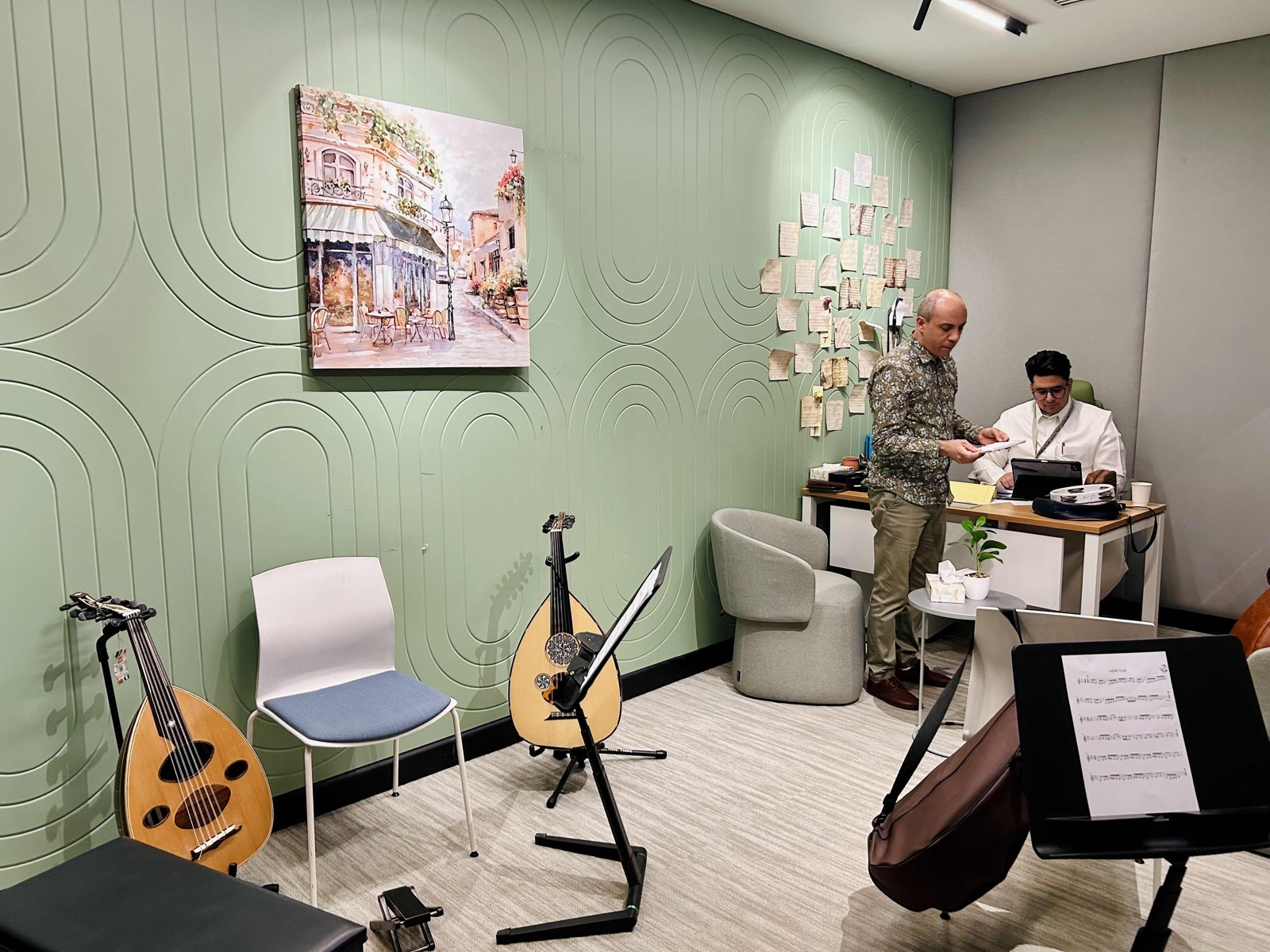
The correspondent met the director of The Oud House Riyadh, Nehad El-Sayed, and its deputy director, Islam Taha, to hear about the institution's founding and how it is run. Both are Egyptian-born oud players and educators who, drawing on careers at the Cairo Oud House and European music-education institutions, are now involved in training the next generation in Riyadh. In this way, Saudi Arabia is actively recruiting professional performers and educators from abroad to develop its own music industry. In particular, as music specialists from Egypt and the wider Arab world take part on the ground, they are raising the level of expertise in traditional-music education and contributing to the building of Saudi Arabia's music-education infrastructure.
Nehad El-Sayed, director of The Oud House Riyadh, and deputy director Islam Taha — Source: photo by the correspondent
According to the two, students master a range of Arab musical traditions and performance techniques and, after completing a set course, have their skills assessed through public performance. Beyond simple hobby instruction, training professional musicians is the institution's primary goal. With support from the Music Commission, it also provides professional music education at relatively accessible cost, running private lessons, music theory and ensemble activities together.
Essam, an Egyptian-born oud player interviewed by the correspondent, belongs to a generation that has directly experienced the changes in Saudi society; after completing the professional-performer course at The Oud House Riyadh, he now works in music education. "In the past, there was a negative image attached to men who played the oud," Essam said. "Now, if anything, an atmosphere is forming in which such people are respected as those engaged in cultural and artistic work." He recalled that "at the time, even carrying an oud around was a source of unease," adding that "some players would put the instrument in a black rubbish bag so it couldn't be seen while they travelled." He explained that in an era when social attitudes toward musical activity were far more conservative than today, choosing the path of a professional musician was not easy in itself. Recently, however, as music-education institutions have multiplied and performance opportunities have expanded, the number of young people majoring in music or choosing it as a profession is gradually rising, he added.
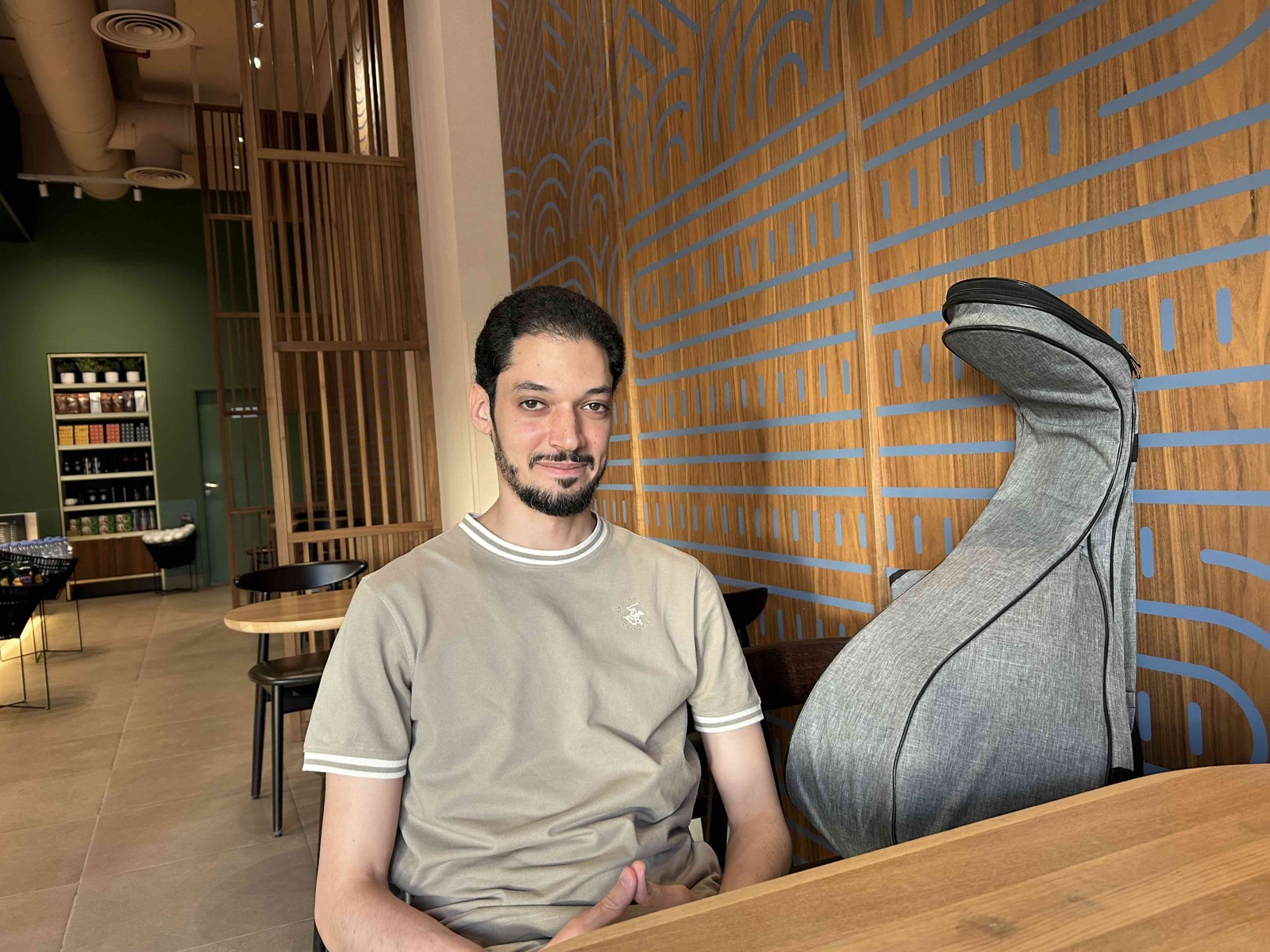
Oud player Essam — Source: photo by the correspondent
The Saudi Music Hub: Connecting Music to Everyday Life
The Saudi Music Hub maintains bases in major cities including Riyadh, Jeddah and Al Khobar, and serves to widen access to music education for ordinary citizens and aspiring musicians while training professional performers. For Western-instrument instruction it has adopted the curriculum of Britain's Associated Board of the Royal Schools of Music (ABRSM), while for traditional Arab instruments and music production it runs a curriculum jointly developed by Saudi and international experts.
At the site the correspondent visited, citizens of a wide range of ages — from young children to adult learners — were taking part in classes and practice. The programme spans a broad range: from Western instruments such as piano, violin, cello, flute, saxophone and classical guitar to traditional Arab instruments including the oud, qanun and ney, along with vocals, DJing and music production. It also holds regular free workshops to widen the chances for more members of the public to encounter music; creating an environment in which ordinary citizens, not only aspiring professionals, can learn and enjoy music is likewise an important goal of Saudi music policy.
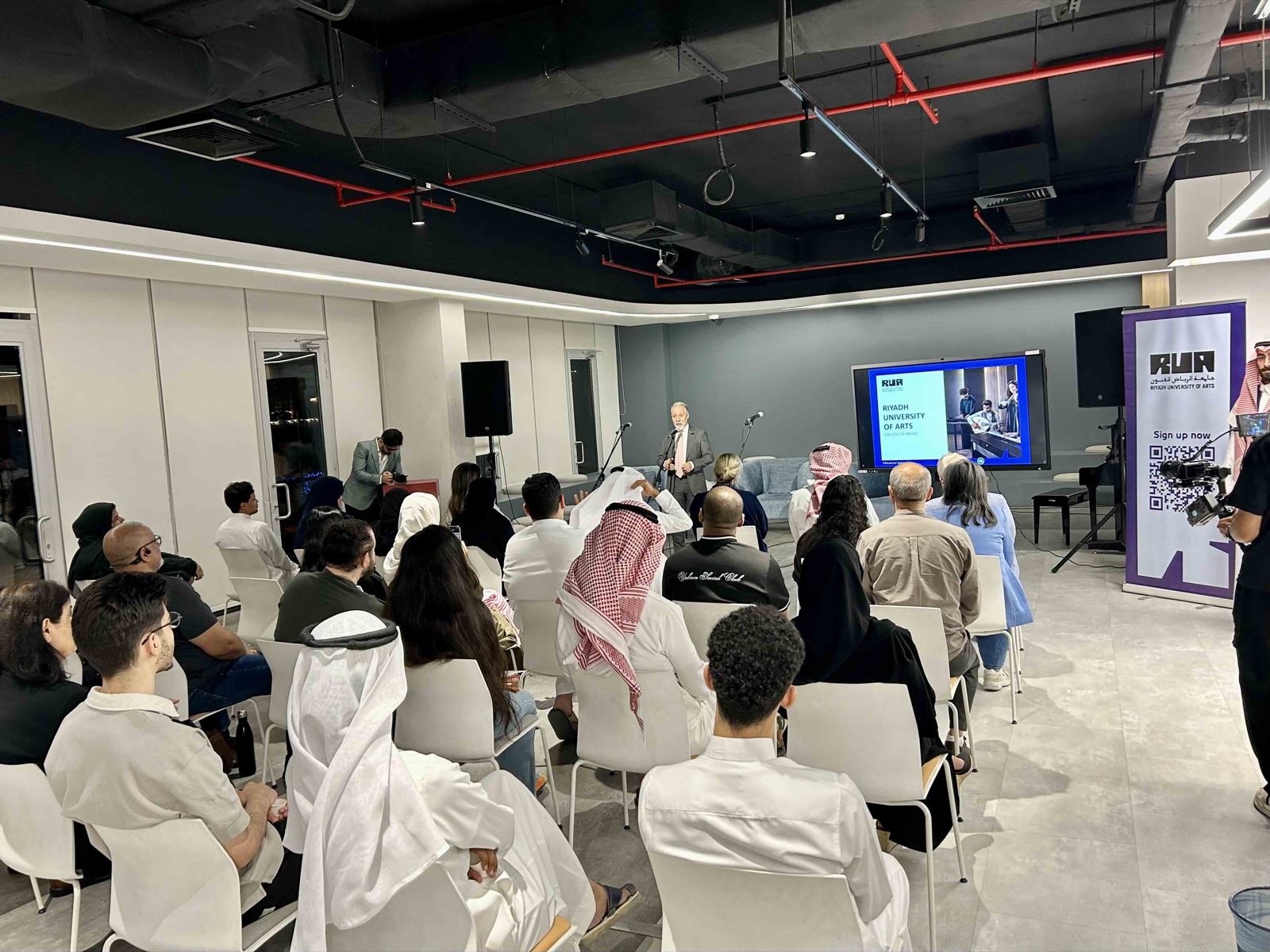
On the day of the correspondent's visit, an admissions briefing was also held for the music department of the Riyadh University of Arts, which is due to open this year. This shows that Saudi Arabia is extending music education beyond the level of a hobby or short-term training into the framework of university education.
Admissions briefing for the Riyadh University of Arts music department, held at the Saudi Music Hub — Source: photo by the correspondent
A Symbol of Saudi Arabia's Music Industry: The Saudi National Orchestra and Choir
This music-education complex is also home to the Saudi National Orchestra and Choir, a national arts organisation representing the Kingdom. Operated as a national arts body under the Ministry of Culture's Music Commission, it is charged with reinterpreting the traditional musical heritage of Saudi Arabia's various regions in a contemporary idiom and presenting it on stages at home and abroad.
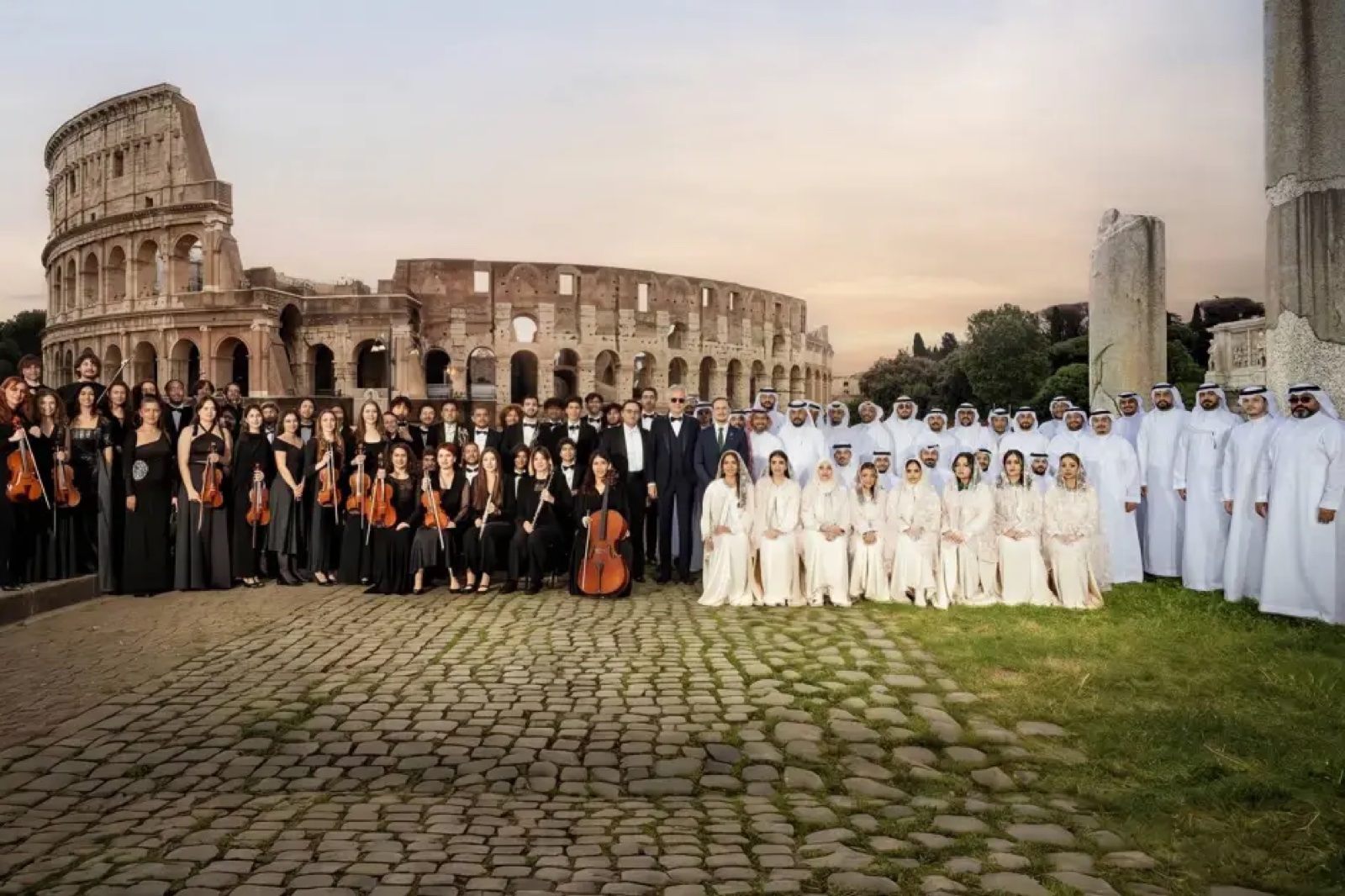
Lately it has been actively expanding overseas performances, taking on a symbolic role in cultural diplomacy. In particular, a performance held in Rome, Italy, in May 2026 featured Saudi traditional music in collaboration with the orchestra, drawing the interest of local audiences. Through such international performances, the Music Commission is making the identity of Saudi music known to the world and strengthening the national cultural brand.
The Saudi National Orchestra and Choir, which recently performed in Rome — Source: photo by the correspondent
Indeed, the very structure in which the Saudi Music Hub, an educational institution; The Oud House, a body for training professional performers; and the Saudi National Orchestra and Choir, a national arts organisation, all sit within one space shows how Saudi Arabia's music industry is developing by linking education, training and performance into a single ecosystem. The sounds of lessons and practice drifting through the music-education complex on Olaya Street were not merely the sound of music but also the voice of a changing Saudi Arabia. Pursuing the preservation of traditional music, the training of professional talent, wider public participation in culture and international cultural exchange all at once, Saudi Arabia's music policy looks set to draw attention as an important case study in the development of the Middle East's music industry.
Image Sources & References
— Photos by the correspondent
— Saudi Music Hub, musichubs.moc.gov.sa
— Naseer Shamma Official Website, shammamusic.com
— The Oud House, theoudhouse.com
— Saudi Music Commission, music.moc.gov.sa
— Music House, musichouse.sa
— Saudi Government Portal (my.gov.sa) (5 Nov 2024). "Launches Oud House in Riyadh; Registration Opened."
— Billboard Arabia (20 May 2026). "The World Was Listening: The Saudi National Orchestra and Choir in Rome."
— Arab News (14 May 2026). "Riyadh University of Arts opens applications for first student intake."